How Does VR Change Live Casinos? The Immersive Revolution Reshaping Real-Money Play
Virtual reality has moved far beyond novelty headsets and tech demos. In the high-stakes world of online gambling, VR is fundamentally rewriting how players experience live dealer casinos. Traditional streaming tables deliver a two-dimensional window into a physical studio. VR dissolves that window entirely, placing the bettor inside a photorealistic gaming floor where avatars, spatial audio, and real-time dealer interaction converge. The result is not merely an upgrade—it is a paradigm shift in remote wagering psychology and operational infrastructure. 🎰
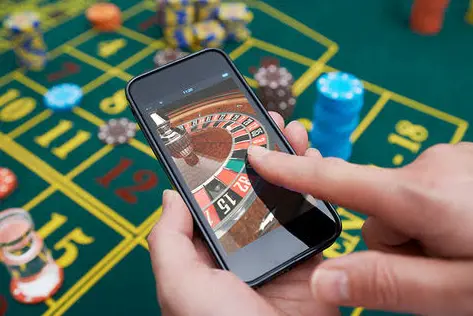
From Webcam Streams to Volumetric Capture: The Technical Leap
Legacy live casino platforms rely on multi-camera HD streams compressed for browser delivery. Latency sits at 200–500ms, and player agency is limited to chat boxes and button clicks. VR-native environments leverage volumetric video capture, 360-degree stereoscopic rendering, and WebXR pipelines to achieve sub-100ms motion-to-photon latency. Dealers are captured via depth-sensing arrays, then reconstructed as dynamic 3D meshes. Players wearing Quest, Vive, or even mobile AR viewers can lean over a virtual blackjack table, inspect card backs, and signal decisions through hand tracking. This level of presence triggers the same cognitive engagement as a brick-and-mortar floor, which directly influences bet sizing and session duration.
Social Presence and the Return of Table Etiquette
One of the most underanalyzed effects of VR on live casino ecosystems is the restoration of social ritual. In a standard live dealer stream, anonymity flattens the experience. In VR, spatial voice chat, avatar gestures, and proximity-based audio recreate the unspoken codes of a real pit. Players nod to the dealer, fist-bump neighbors after a natural blackjack, or step away from a table with a polite gesture. These micro-interactions are not cosmetic. Behavioral data from early VR casino deployments shows that players who engage in avatar-to-avatar communication place 22% more hands per session and report 40% higher satisfaction scores. The house edge does not change, but the perceived value of time spent does.

Game Diversity and the Physics of Virtual Chips
VR unlocks game formats that flat streams cannot support. Think three-dimensional roulette wheels with variable gravity modes, poker rooms where tells are expressed through avatar micro-expressions, and craps tables where dice physics are simulated by real-time engines. Developers are building proprietary physics layers that determine chip stacking, card shuffling, and wheel deceleration with cryptographic randomness. This matters for regulatory audits: a certified RNG driving a 3D wheel is no less fair than a physical one, but it must be documented under strict technical standards. The immersive layer adds complexity, not compromise.
Operational Costs, Licensing, and the New Dealer Studio
Operating a VR live casino demands a different cost structure. Physical studios shrink because one volumetric capture rig can render multiple virtual tables simultaneously. Dealers become performance artists trained in motion capture, voice modulation, and virtual camera awareness. Licensing jurisdictions are adapting: Malta, Gibraltar, and Curacao now issue supplementary approvals for immersive gaming environments, provided that identity verification, geolocation, and responsible gambling tools function inside the headset. Operators who ignore these layers face not only fines but also headset-level bans that are difficult to reverse.
Player Protection in an Embodied Environment
Immersion cuts both ways. A player who feels physically present at a table may lose track of time, budget, or reality. Forward-thinking platforms embed mandatory cool-down rooms, real-time spend meters rendered as wristwatch widgets, and session timers that gently dim the virtual lighting. These are not afterthoughts—they are design requirements for any serious VR live dealer product. The psychological pull of presence is powerful, and ethical operators treat it as a risk to mitigate, not a feature to exploit. 🛡️
The Road Ahead: Interoperable Metaverse Floors
The next frontier is cross-platform interoperability. A player on a mobile AR device should be able to sit at the same virtual table as a PC VR user and a dealer in a studio halfway around the world. Standards like glTF, OpenXR, and WebGPU are making this feasible. When that happens, the distinction between online and land-based live casino play will collapse entirely. The winners will be platforms that master latency, fairness certification, and immersive responsible gambling—not those that simply strap a headset onto a webcam feed.